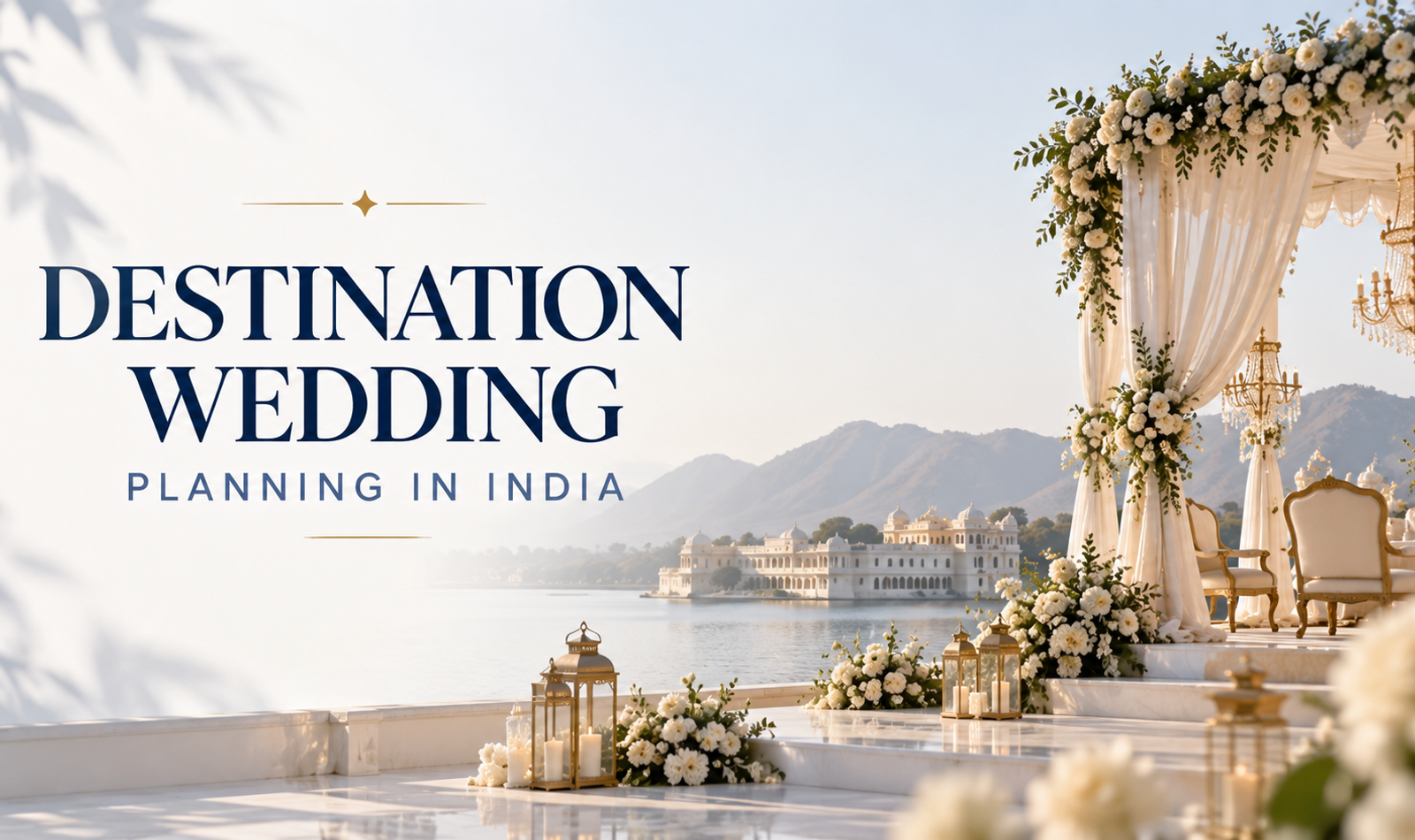
Destination Wedding Planning in India: Complete Checklist, Timeline & Costs
A destination wedding is more than a celebration in a beautiful location. It is an experience that brings together family traditions, meaningful ceremonies, luxury hospitality, entertainment, and carefully planned moments in a setting that reflects the couple's personality. From the royal palaces of Rajasthan to the beaches of Goa and the scenic backwaters of Kerala, India offers an extraordinary range of destinations for memorable weddings.
However, destination wedding planning in India requires significantly more coordination than organising a conventional wedding in your hometown. Couples must manage venue bookings, accommodation, guest transportation, vendor schedules, décor, catering, entertainment, and multiple wedding functions, often across two or three days.
Without a structured plan, even the most beautiful wedding venue can become difficult to manage. Unexpected expenses, last-minute vendor problems, travel delays, and poor guest coordination can affect the overall celebration.
This is why working with experienced professionals for destination wedding planning and event management can make a meaningful difference. A professionally managed wedding brings all essential elements together, allowing families to enjoy their celebrations while an organised team handles the logistics.
In this comprehensive destination wedding planning guide, we explore the best wedding destinations in India, estimated costs for 2026, a practical 12-month timeline, a complete wedding checklist, guest hospitality requirements, and the most important decisions couples should make before booking their dream wedding.
What Is a Destination Wedding?
A destination wedding is a marriage celebration organised at a location away from the couple's primary city of residence. Instead of hosting ceremonies at a familiar local venue, families choose a destination that offers a distinctive atmosphere, architecture, landscape, or cultural experience.
In India, destination weddings are commonly hosted at heritage palaces, luxury resorts, beach properties, hillside hotels, private estates, and premium hospitality venues. These celebrations often combine traditional Indian wedding rituals with travel experiences, themed entertainment, personalised guest services, and destination-inspired décor.
For example, a wedding in Udaipur may feature royal architecture, lakeside ceremonies, and traditional Rajasthani hospitality. A Goa wedding may focus on sunset ceremonies, tropical landscapes, and relaxed celebrations, while a Kerala wedding may incorporate backwater views, natural decorations, and regional cuisine.
The main advantage of a destination wedding is that multiple celebrations can be organised around one coordinated guest experience. Instead of travelling between separate venues, family members and friends can participate in mehendi, haldi, sangeet, wedding rituals, and reception events within the same resort or nearby properties.
However, this format requires careful planning. Accommodation, local transportation, vendor coordination, and guest communication all become integral parts of the wedding experience.
Couples seeking personalised celebrations can also explore our luxury wedding planning and destination design guide for additional ideas about creating distinctive wedding experiences.
Why Are Destination Weddings Popular in India?
Destination weddings have become an appealing option for couples who want their celebrations to feel more personal, immersive, and memorable. Rather than treating the wedding as a sequence of ceremonies, many families now approach it as a complete experience built around hospitality, entertainment, culture, and meaningful time together.
One of the biggest attractions is the opportunity to choose an unforgettable location. A heritage palace, beachfront resort, or mountain retreat naturally provides a visual setting that can influence everything from wedding photography to decoration themes.
Destination weddings also allow couples to create more intimate celebrations. Although guest counts vary widely, many couples prefer inviting a smaller group of close relatives and friends rather than organising a very large conventional event.
Another important benefit is the possibility of hosting several functions at one destination. Guests can participate in ceremonies, enjoy leisure activities, and spend time with family members without constantly travelling across a city.
For families planning elaborate celebrations, professional event and wedding management services can help coordinate the creative, operational, and hospitality requirements of a multi-day wedding.
Best Destination Wedding Locations in India
Choosing the right destination is one of the most important decisions in the wedding planning process. The location affects the overall budget, travel arrangements, weather conditions, accommodation requirements, vendor availability, and the experience guests will enjoy.
India offers wedding destinations suited to different preferences and budgets. The ideal location should be selected after considering the guest count, wedding season, accessibility, desired atmosphere, and total available expenditure.
1. Udaipur — Royal Palace and Lakeside Weddings
Udaipur is one of India's most recognised luxury wedding destinations. Known for its historic palaces, picturesque lakes, and heritage hospitality, the city offers an elegant setting for couples who want a royal wedding experience.
Wedding celebrations in Udaipur often include palace-inspired décor, lakeside mandaps, traditional folk entertainment, and grand receptions. Many premium properties provide spaces for multiple ceremonies, making the city particularly attractive for two- or three-day celebrations.
However, Udaipur can be expensive during popular wedding dates. Premium accommodation, palace property bookings, event production, and guest transfers may represent a considerable part of the overall budget.
Couples considering this destination should evaluate property capacity, airport transfers, room availability, and event permissions before confirming a booking.
Professional wedding planning and event coordination in Udaipur can help families explore the destination while building a structured celebration plan.
2. Jaipur — Heritage Weddings with Royal Architecture
Jaipur combines traditional Rajasthani architecture, luxury hospitality, and comparatively convenient connectivity with major Indian cities. Its heritage hotels, palace-inspired resorts, and large event properties make it a popular choice for grand Indian weddings.
A Jaipur destination wedding can incorporate traditional welcome ceremonies, colourful mehendi celebrations, royal-style entrances, cultural performances, and sophisticated reception décor.
The city offers a broad selection of venues, allowing families to explore both premium and high-luxury wedding formats. Its connectivity can also make guest movement more manageable compared with destinations requiring long road transfers.
Families planning a Rajasthan celebration can explore event and wedding planning services in Jaipur to understand the coordination involved in large and intimate weddings.
3. Goa — Beachfront and Tropical Destination Weddings
Goa is particularly popular with couples who prefer a relaxed, scenic wedding atmosphere. Its beaches, luxury resorts, tropical landscapes, and coastal hospitality provide a distinctive alternative to traditional palace weddings.
A beach wedding may include a sunset ceremony, ocean-facing mandap, floral installations, open-air cocktail evenings, and resort-based entertainment. Goa can also accommodate themed celebrations combining contemporary wedding styling with Indian rituals.
Weather planning is essential. The monsoon season can affect outdoor functions, while certain beaches and public areas may require additional permissions or impose restrictions.
Couples should also confirm whether the chosen property permits amplified music, late-night events, outside catering, and private beach access.
A well-planned Goa destination wedding should balance beautiful aesthetics with realistic weather arrangements and operational planning.
4. Kerala — Backwater, Resort and Nature-Inspired Weddings
Kerala offers a refined setting for couples seeking a celebration surrounded by greenery, backwaters, coastal views, and peaceful landscapes.
Luxury resorts near Kochi, Kumarakom, and other scenic areas can provide attractive wedding settings for intimate and mid-sized celebrations. Couples may choose elegant floral mandaps, traditional South Indian ceremonies, regional menus, and relaxed guest experiences.
One of Kerala's biggest advantages is the ability to create an immersive hospitality experience. Guests can enjoy regional cuisine, cultural activities, and leisure experiences alongside the wedding celebrations.
However, seasonal rainfall, resort accessibility, and transport between venues must be considered carefully.
Families exploring this destination can learn more about wedding planning and event management in Kerala.
5. Rishikesh — Riverside and Spiritual Weddings
Rishikesh is an attractive choice for couples who prefer a serene environment and a celebration connected to nature or spirituality.
Situated near the foothills of the Himalayas, the destination offers scenic views, riverside resorts, and quieter wedding environments. Many couples choose Rishikesh for intimate ceremonies, traditional rituals, and celebrations involving close family members.
Destination weddings here require particular attention to venue restrictions, local regulations, weather conditions, and transportation. Families should verify whether a property allows the planned music, catering, decorations, and event schedule.
Couples considering a peaceful celebration can explore event and wedding planning in Rishikesh.
How to Choose the Right Wedding Destination
The best destination is not necessarily the most expensive or visually impressive location. It is the one that supports the couple's priorities while remaining practical for their guests.
Before finalising a destination, compare the travel time from major cities, nearest airport, seasonal weather, venue capacity, room availability, catering flexibility, and total expected cost.
A destination that offers affordable venue rental but requires expensive guest transfers may ultimately cost more than a slightly higher-priced property with better connectivity.
How Much Does a Destination Wedding Cost in India in 2026?
One of the most frequently asked questions is how much a destination wedding costs in India.
There is no universal price because the final expenditure depends on the destination, guest count, venue category, number of functions, accommodation requirements, décor preferences, and entertainment arrangements.
As an illustrative planning framework, a modest destination wedding with approximately 50–100 guests may be possible from around ₹15 lakh to ₹30 lakh at selected properties. A more elaborate celebration for 100–200 guests may require approximately ₹30 lakh to ₹80 lakh, while luxury palace weddings and large resort buyouts can cost ₹1 crore or substantially more.
These estimates are not guaranteed package prices. They are broad planning ranges, and they may exclude guest flights, jewellery, wedding attire, certain taxes, and premium entertainment.
Estimated Destination Wedding Costs by Location
The following broad ranges can help couples begin early budgeting for approximately 100–150 guests, with around two days of celebrations and selected accommodation and wedding services:
Destination
Illustrative Budget Range
Udaipur
₹30 lakh – ₹80 lakh+
Jaipur
₹25 lakh – ₹65 lakh+
Goa
₹25 lakh – ₹70 lakh+
Kerala
₹20 lakh – ₹60 lakh+
Rishikesh
₹18 lakh – ₹45 lakh+
These are illustrative estimates, not verified prices for specific hotels. Premium properties, extensive decoration, additional nights, larger guest lists, and celebrity appearances can increase the budget significantly.
The correct approach is to build a complete expense estimate before signing venue contracts. Families should request itemised quotations and confirm which services are included.
1. Wedding Venue and Accommodation Costs
Venue and accommodation expenses often represent one of the largest portions of a destination wedding budget.
The final cost depends on the property category, location, number of rooms, booking duration, event spaces, and whether the couple requires partial or exclusive use of the venue.
A luxury palace or resort may charge separately for guest rooms, banquet spaces, outdoor lawns, additional functions, and special event services.
It is important to understand minimum room commitments, occupancy restrictions, additional guest charges, and cancellation conditions before paying a deposit.
2. Catering and Food Arrangements
Food is an essential part of the Indian wedding experience. Destination wedding catering can include welcome meals, breakfast, lunch, high tea, cocktail evenings, sangeet dinners, wedding meals, and farewell brunches.
The overall cost depends on the number of meals, number of guests, cuisine selection, live counters, service style, and whether outside catering is permitted.
Couples should plan menus carefully rather than simply selecting the largest available package. Guest demographics, dietary preferences, regional traditions, and event timing all influence the catering experience.
3. Wedding Décor and Floral Design
Décor transforms a venue into a wedding experience that reflects the couple's personality.
Expenses may include mandap construction, floral installations, stage design, decorative lighting, furniture, signage, entrance structures, and themed elements for different ceremonies.
Custom installations and imported flowers can substantially increase costs. Couples can often manage their budget more effectively by selecting venues with attractive existing architecture and creating distinctive focal points rather than redesigning every area.
4. Photography and Videography
Professional photography and cinematography preserve the moments that make a destination wedding memorable.
Couples may require traditional photography, candid coverage, cinematic wedding films, drone footage where permitted, pre-wedding shoots, teaser videos, and social-media-ready content.
Before booking, review the photographer's complete portfolio, delivery timeline, editing style, number of professionals included, travel expenses, and final deliverables.
5. Entertainment and Artist Management
Entertainment adds energy and personality to multi-day wedding celebrations.
Families may arrange live singers, DJs, traditional performers, instrumental musicians, choreographers, hosts, and celebrity artists.
Entertainment budgets vary considerably depending on artist popularity, performance duration, technical production, travel requirements, and rider specifications.
For premium weddings, professional celebrity management and artist coordination can help manage bookings, scheduling, logistical requirements, and communication.
6. Guest Transportation and Hospitality
Guest hospitality is one of the most frequently underestimated expenses in destination wedding planning.
Costs may include airport pickups, railway station transfers, private vehicles, hotel check-in coordination, welcome hampers, luggage assistance, elderly guest support, and transportation between wedding venues.
A structured guest management service for destination weddings helps ensure that guests receive timely information, appropriate assistance, and a coordinated hospitality experience.
Example: ₹50 Lakh Destination Wedding Budget
For a hypothetical two-day wedding with approximately 120 guests, a ₹50 lakh planning budget could be divided as follows:
Expense Category
Illustrative Allocation
Venue and accommodation
₹18,00,000
Catering
₹9,00,000
Décor and flowers
₹7,00,000
Photography and videography
₹3,00,000
Entertainment and sound
₹3,00,000
Guest transport and hospitality
₹3,00,000
Planning and coordination
₹2,00,000
Contingency reserve
₹5,00,000
Total
₹50,00,000
This is an example of budget allocation, not a vendor quotation. Guest airfare, wedding outfits, jewellery, taxes, or specialised production may require additional funding depending on the arrangements.
The purpose of this framework is to allocate funds across the complete wedding experience rather than spending disproportionately on the venue.
Complete 12-Month Destination Wedding Planning Timeline
A destination wedding should ideally be planned well in advance, particularly when couples want popular wedding dates, luxury properties, and experienced vendors.
Although smaller celebrations may be organised within a shorter period, a 12-month timeline provides greater flexibility and allows families to make informed decisions.
12 Months Before the Wedding: Establish the Vision and Budget
The first stage is to define the overall wedding vision.
Couples should discuss whether they want a royal celebration, beachfront ceremony, intimate resort wedding, or multi-day luxury event. They should also agree on the approximate guest count, preferred destination, wedding dates, and available budget.
At this stage, create an initial guest list and identify the major spending categories. A clear financial framework helps prevent unrealistic expectations during venue selection.
Families planning large celebrations may benefit from understanding budgeting and cost control for high-budget weddings before making major financial commitments.
10–11 Months Before: Finalise the Destination and Venue
Once the budget and estimated guest count are established, begin comparing potential destinations and wedding properties.
Review venue capacity, accommodation inventory, event restrictions, cancellation conditions, weather suitability, and airport connectivity.
Whenever practical, conduct a property visit before confirming the booking.
The venue agreement should clearly specify the spaces included, event timings, room commitments, applicable charges, and payment schedule.
8–9 Months Before: Book Major Wedding Vendors
This is the stage to confirm key professionals, including wedding planners, decorators, photographers, caterers, and entertainment providers.
Couples should review complete proposals rather than choosing suppliers based only on attractive photographs or an initial price estimate.
Every vendor contract should define deliverables, setup schedules, staffing, payment milestones, cancellation terms, and responsibilities.
If the wedding includes multiple functions, develop a preliminary schedule so different vendor teams can plan around the same timeline.
6–7 Months Before: Plan Guest Hospitality and Travel
Guest planning becomes increasingly important as the wedding date approaches.
Prepare a verified guest database containing names, contact details, room preferences, arrival schedules, special requirements, and travel information.
Families should begin coordinating room allocations, airport transfers, welcome arrangements, and communication channels.
For a more detailed hospitality framework, read our guide to guest management for destination weddings in India.
4–5 Months Before: Finalise Wedding Design and Entertainment
At this stage, the wedding's creative direction should become more detailed.
Couples can finalise colour palettes, floral concepts, stage design, mandap styling, invitation aesthetics, and entertainment plans.
The production team should develop layouts for each function, including guest seating, stage positions, dining arrangements, technical requirements, and movement routes.
If celebrity performances are involved, appearance agreements, hospitality requirements, travel arrangements, and technical specifications should be reviewed well before the wedding.
2–3 Months Before: Confirm Operational Details
The focus now shifts from creative planning to operational preparation.
Review confirmed guest numbers, room allocations, menu selections, transfer schedules, vendor payments, function timings, and ceremony requirements.
The planning team should also establish contingency arrangements for weather changes, vendor delays, transportation issues, or unexpected guest requirements.
Detailed production schedules should be shared with relevant teams so everyone understands their responsibilities.
1 Month Before: Conduct Final Reviews
Approximately one month before the wedding, families should complete a comprehensive planning review.
Confirm all major vendor bookings, settlement schedules, photography requirements, hospitality arrangements, and technical production plans.
Guest arrival details should be updated regularly, and special requirements should be communicated to the hospitality team.
A final venue walkthrough or detailed virtual operational review can help identify issues before setup begins.
Wedding Week: Execute the Celebration
During wedding week, the focus should move entirely to execution and coordination.
The event team should manage vendor arrivals, room readiness, guest transfers, decoration installation, technical rehearsals, catering coordination, and ceremony schedules.
A designated point of contact should supervise each important operational area.
The couple and their families should not have to manage routine supplier communication or resolve preventable logistical problems during their celebration.
Professional coordination allows the experience to remain organised while the family concentrates on the wedding itself.
Complete Destination Wedding Planning Checklist
A comprehensive wedding checklist helps ensure that important requirements are not overlooked.
The following checklist can be used alongside a detailed wedding planning calendar.
Wedding Planning and Budget
- Confirm wedding dates and preferred destinations.
- Finalise an estimated guest count.
- Establish the total wedding budget.
- Create separate budgets for each function.
- Allocate funds for unexpected expenses.
- Select and confirm a wedding planning team.
Venue and Accommodation
- Shortlist suitable wedding properties.
- Verify event capacity and accommodation availability.
- Confirm room categories and booking requirements.
- Review venue contracts and payment terms.
- Check outdoor event permissions and noise restrictions.
- Confirm backup spaces for weather-related changes.
Guest Hospitality
- Prepare a complete guest database.
- Collect arrival and departure information.
- Allocate hotel rooms.
- Organise airport and station transfers.
- Plan welcome desks and guest assistance.
- Arrange support for elderly guests and children.
- Prepare emergency contact information.
Vendors and Production
- Confirm decorators and floral designers.
- Finalise photography and cinematography teams.
- Book catering and entertainment providers.
- Arrange lighting, sound, staging, and technical equipment.
- Finalise event layouts and vendor schedules.
- Prepare backup arrangements for essential services.
Wedding Ceremonies
- Finalise the ceremony schedule.
- Confirm priests, officiants, or religious representatives.
- Prepare ritual materials.
- Coordinate family participation.
- Arrange bridal and groom preparation spaces.
- Confirm wedding procession and entrance arrangements.
Final Execution
- Circulate the master wedding schedule.
- Verify vendor arrival and setup times.
- Conduct equipment checks and rehearsals.
- Confirm guest transportation movements.
- Review emergency and medical support.
- Assign coordination responsibilities for every function.
A checklist becomes most effective when each task has an owner, deadline, and clear completion status.
How to Choose the Right Destination Wedding Venue
The venue influences almost every other aspect of the wedding.
While photographs and visual appeal are important, couples should evaluate whether the property can practically support all planned functions, guests, and vendors.
Start by comparing the expected guest count with the actual event capacity. A property may offer enough accommodation but have limited space for a large sangeet or reception.
The location should also be assessed from a travel perspective. Long transfers between airports, hotels, and event spaces can create fatigue and increase operational expenses.
Couples should confirm whether the property allows outside vendors, music performances, late-night celebrations, fireworks where lawful, and extensive décor installations.
Most importantly, obtain written clarification about all charges, taxes, deposits, and cancellation policies.
The goal is to choose a venue that delivers the desired atmosphere without creating avoidable logistical complications.
Destination Wedding Guest Management and Hospitality
Guest hospitality plays a central role in the success of any destination wedding.
Unlike a conventional local wedding, destination celebrations often involve guests travelling from different cities or countries. They may arrive at different times, require separate transportation arrangements, or have individual accommodation preferences.
A professional hospitality operation should begin before guests reach the destination.
Pre-arrival communication can include travel details, hotel information, transfer contacts, event schedules, and important instructions.
Once guests arrive, a dedicated hospitality desk can assist with check-in, luggage movement, room allocation, transportation, and general enquiries.
Special attention should be given to elderly guests, families travelling with children, and individuals with accessibility or medical requirements.
For larger weddings, dedicated staff may be assigned to hotels, airports, and wedding venues to coordinate movements across multiple locations.
Families planning elaborate celebrations can refer to our complete guide to guest management for premium events and weddings.
Good hospitality is not simply about offering luxury accommodation. It is about helping every guest feel informed, welcomed, and comfortable throughout the celebration.
Wedding Décor, Entertainment and Personalisation
Memorable destination weddings often have a consistent creative identity.
This identity may come from the couple's story, cultural background, favourite colours, travel experiences, or the architectural character of the chosen destination.
Instead of repeating the same decoration style across every ceremony, couples can create different atmospheres for different functions.
For example, a mehendi celebration may incorporate vibrant colours and interactive activities, while a sangeet may use dramatic lighting, stage performances, and energetic entertainment. The wedding ceremony itself may feature elegant floral arrangements and a more traditional visual style.
Entertainment can also reflect the destination. Regional musicians, folk performers, contemporary DJs, and curated live performances can complement the overall wedding experience.
For couples considering well-known performers, our celebrity appearance checklist for event day explains important planning considerations for artist-led celebrations.
Every creative element should ultimately serve the guest experience and the couple's preferences rather than simply increasing visual complexity.
Legal Requirements and Permissions for Destination Weddings in India
Legal and operational requirements should never be treated as last-minute formalities.
Depending on the type of ceremony, couples may need to consider applicable marriage laws, registration procedures, documentation requirements, and local administrative rules.
Marriage registration requirements vary according to the legal framework used and the relevant state or local authority. Religious ceremonies and legal registration are not always interchangeable processes.
Couples should check the applicable requirements with the appropriate marriage registrar, particularly when one or both partners are foreign nationals, when documentation was issued outside India, or when the legal registration is planned in a different jurisdiction.
Event permissions may also be necessary for amplified music, temporary structures, fireworks, drone filming, alcohol service, or activities conducted in public or environmentally sensitive areas.
The venue and planning team should identify which permissions apply, who is responsible for obtaining them, and whether approval has been granted.
Because these requirements vary, couples should not assume that a hotel booking automatically includes every event permission.
How to Save Money on a Destination Wedding Without Compromising the Experience
Managing a destination wedding budget does not necessarily mean reducing the quality of the celebration.
The most effective cost-saving decisions usually come from prioritisation, efficient planning, and realistic choices.
Choose the Right Guest Count
Guest count affects accommodation, catering, transport, seating, and hospitality requirements.
A carefully selected guest list can reduce costs across several categories without making the wedding feel less meaningful.
Consider Alternative Wedding Dates
Highly popular dates and holiday periods may attract premium venue pricing.
Couples with flexible schedules can compare several dates and consider suitable shoulder-season options. Weather and travel convenience should remain important considerations.
Select a Venue with Strong Existing Design
A heritage property, scenic resort, or architecturally distinctive venue may require fewer elaborate decorations.
Using the venue's natural features can create an elegant atmosphere while reducing custom construction and décor requirements.
Reduce Unnecessary Vendor Movement
Transporting equipment and large vendor teams between cities can increase expenses.
Where quality and reliability are comparable, carefully selected local suppliers may reduce travel, accommodation, and logistics costs.
Create a Contingency Budget
A contingency reserve of approximately 10–15% can help absorb unexpected expenses, depending on the event's complexity and uncertainty.
This reserve should be included in the original financial plan instead of being considered only when problems occur.
The objective is not to choose the cheapest possible wedding. It is to invest in the elements that genuinely improve the couple's celebration and guest experience.
Common Destination Wedding Planning Mistakes to Avoid
Even experienced families can encounter planning difficulties when managing celebrations in an unfamiliar destination.
One common mistake is choosing the venue before confirming the complete budget. A property may appear affordable initially, but accommodation commitments, service charges, transportation, and technical production can increase the final expenditure considerably.
Another mistake is underestimating guest movement. Delayed airport pickups, confusing room allocations, and poorly communicated event schedules can affect the entire guest experience.
Families may also overlook weather-related risks. Outdoor ceremonies require suitable backup arrangements, particularly in coastal and hill destinations.
Poor vendor coordination is another source of difficulty. Decorators, catering teams, photographers, performers, and technical production teams must work around the same function schedule.
Finally, couples sometimes create an excessively packed itinerary. While multiple celebrations can be exciting, guests also need enough time to rest, prepare, and enjoy the destination.
Experienced planning involves balancing celebration, logistics, guest comfort, and realistic timing.
Why Professional Destination Wedding Planning Matters
A destination wedding involves several interconnected operations that must function together.
The planning team may need to coordinate venue management, accommodation, transportation, decorators, caterers, entertainment providers, photographers, family representatives, and technical production teams.
When each supplier works independently, communication gaps can create problems. A professional planning structure helps establish one coordinated operational plan.
For high-end weddings, the process may involve additional considerations such as VIP guest movements, celebrity schedules, private hospitality arrangements, security coordination, and detailed production rehearsals.
Couples planning elaborate celebrations can explore our insights on planning ultra-luxury events in India.
The value of professional management lies not only in creative design but also in ensuring that the experience is organised, financially controlled, and executed with attention to detail.
How Double Trouble Studio Can Support Destination Wedding Planning
At Double Trouble Studio, we approach destination weddings as complete experiences that combine thoughtful planning, creative presentation, coordinated hospitality, and professional event execution.
Our event and wedding services focus on helping clients structure celebrations around their requirements, destination preferences, guest experience, and overall vision.
Depending on the project scope, this may involve planning support, vendor coordination, production requirements, hospitality management, entertainment planning, and on-ground execution.
Through our wedding and event management services, couples can explore support for celebrations ranging from intimate destination weddings to elaborate multi-function events.
For families with extensive guest lists, our guest management services can help address the operational requirements of guest communication, arrivals, accommodation, and hospitality coordination.
Where the celebration includes well-known performers or special entertainment, our celebrity management services provide an additional area of support for artist-related arrangements.
Our goal is to help transform a wedding concept into a thoughtfully coordinated celebration where the couple's story, family traditions, and guest experience remain central.
Frequently Asked Questions About Destination Wedding Planning in India
1. How much does a destination wedding cost in India?
The cost of a destination wedding in India can vary from approximately ₹15–30 lakh for selected smaller celebrations to ₹1 crore or more for large luxury events. The final price depends on the destination, venue, guest count, number of functions, accommodation arrangements, and entertainment requirements. These figures are planning estimates rather than guaranteed wedding packages.
2. Which is the best destination for a wedding in India?
The best destination depends on the couple's preferences, budget, and guest requirements. Udaipur is popular for palace and lakeside weddings, Jaipur offers heritage-style celebrations, Goa is attractive for beachfront ceremonies, Kerala offers scenic resort experiences, and Rishikesh is suitable for peaceful riverside celebrations. Accessibility and venue suitability should be considered alongside aesthetics.
3. How far in advance should I plan a destination wedding?
Planning approximately 9–12 months in advance is generally advisable for popular wedding destinations, especially during peak dates. This provides time to compare venues, book vendors, organise guest accommodation, and develop the wedding programme. Smaller events may be organised within shorter timelines, depending on availability and complexity.
4. Can I plan a destination wedding in India within ₹20 lakh?
A destination wedding within ₹20 lakh may be possible with a limited guest list, carefully selected venue, shorter celebration schedule, and controlled decoration and entertainment expenses. Couples should compare complete quotations and account for accommodation, catering, transportation, taxes, and contingency costs before deciding whether the budget is realistic.
5. What is the cost of a destination wedding in Udaipur?
Udaipur wedding costs vary greatly according to property type and guest count. Selected boutique celebrations may fit a budget of several tens of lakhs, while premium heritage properties, extensive room bookings, and palace buyouts can exceed ₹1 crore. Couples should request customised quotations based on their required dates and event schedule.
6. Is Goa cheaper than Udaipur for a destination wedding?
Goa can be more affordable than some luxury palace properties in Udaipur, but this is not always the case. Premium beachfront resorts, peak-season bookings, and elaborate entertainment can make Goa weddings expensive. A reliable comparison should include accommodation, meals, décor, venue charges, transportation, and additional event expenses.
7. How many guests should I invite to a destination wedding?
There is no ideal guest count for every destination wedding. Intimate celebrations may include approximately 30–75 guests, while medium-sized weddings often host 100–200 guests. Large destination weddings can accommodate considerably more people. The appropriate number depends on venue capacity, available rooms, transportation, and the couple's budget.
8. What should be included in a destination wedding package?
A destination wedding package may include venue rental, accommodation, catering, basic decoration, event coordination, and selected hospitality services. However, inclusions vary between properties and vendors. Couples should specifically ask about photography, entertainment, transportation, taxes, technical equipment, vendor meals, and cancellation terms before confirming a package.
9. Do I need a wedding planner for a destination wedding?
Hiring a professional wedding planner is not legally mandatory, but it can be particularly useful for multi-day celebrations involving several vendors and travelling guests. A planner can help coordinate schedules, budgets, production arrangements, hospitality, and event execution. The value becomes more significant as the event's complexity increases.
10. What is the best season for a destination wedding in India?
The ideal season depends on the location. Many Rajasthan destinations are comfortable during cooler months, while coastal destinations such as Goa often attract weddings during drier weather periods. Hill destinations require additional consideration of temperature, rainfall, and accessibility. Couples should review local seasonal conditions before selecting their dates.
11. How can I manage guests travelling from different cities?
Guest management should begin with a central database containing arrival times, travel details, accommodation preferences, and contact information. A dedicated hospitality team can then coordinate airport transfers, room allocations, guest communication, and movement between wedding events. Clear communication is especially important when guests arrive from multiple cities or countries.
12. What are the biggest hidden costs of a destination wedding?
Commonly overlooked costs include transportation, vendor accommodation, additional meals, equipment movement, extra setup hours, technical requirements, service charges, and venue-related restrictions. The best way to avoid budget surprises is to request itemised proposals, define responsibilities, and maintain a contingency reserve.
13. Can I have a luxury destination wedding with a limited guest list?
Yes. A smaller guest list can allow couples to allocate more of their budget toward premium accommodation, personalised décor, fine dining, curated entertainment, and thoughtful hospitality. A luxury wedding does not necessarily require hundreds of guests; it can also be defined by exceptional design, attention to detail, and guest comfort.
14. What permissions are required for a destination wedding in India?
Required permissions depend on the ceremony, location, venue, and planned activities. Couples may need to address marriage registration requirements, local sound restrictions, temporary installations, drone filming, fireworks, or other regulated activities. The relevant local authorities and venue management should confirm the applicable requirements before the event.
15. How can Double Trouble Studio help with destination wedding planning?
Double Trouble Studio offers event and wedding-related services that can support creative planning, hospitality coordination, entertainment arrangements, and event execution according to the agreed project scope. Families can discuss their destination, guest count, preferred dates, and celebration requirements to explore suitable planning support.
Conclusion: Plan a Destination Wedding That Feels Personal, Memorable and Well Organised
A destination wedding in India offers couples the opportunity to celebrate their marriage in some of the country's most beautiful and culturally distinctive locations. Whether the vision involves a royal palace wedding in Udaipur, a beachfront ceremony in Goa, a heritage celebration in Jaipur, or a peaceful resort wedding in Kerala, successful planning requires much more than choosing a beautiful venue.
The most memorable destination weddings bring together meaningful traditions, thoughtful design, comfortable hospitality, reliable vendors, and carefully coordinated events. Every stage, from establishing the initial budget to managing guest departures, contributes to the overall celebration.
Beginning preparations early, understanding realistic expenses, and following a structured destination wedding checklist can help couples make confident decisions while reducing avoidable complications.
At Double Trouble Studio, we believe a wedding should reflect the people celebrating it. The right planning approach transforms individual ideas into a cohesive experience that allows couples and their families to focus on the moments that truly matter.
Planning a destination wedding in India?
Connect with Double Trouble Studio to discuss your wedding destination, event requirements, guest hospitality, creative vision, and planning needs.
Contact Double Trouble Studio to begin planning your celebration.
📩 Email: info@dtsworld.in 📞 Phone: +91 80000 06021 📍 Location: Andheri (West), Mumbai.
Need this for your brand?
Let DTS build your next campaign.
From PR, celebrity management and events to websites, social media, SEO and AI video production — Double Trouble Studio helps brands grow with strategy and execution.
Discuss Your Requirement →